Design & History
The story behind America's most iconic gold coin, from the 1913 Buffalo Nickel to the modern .9999 fine bullion program.
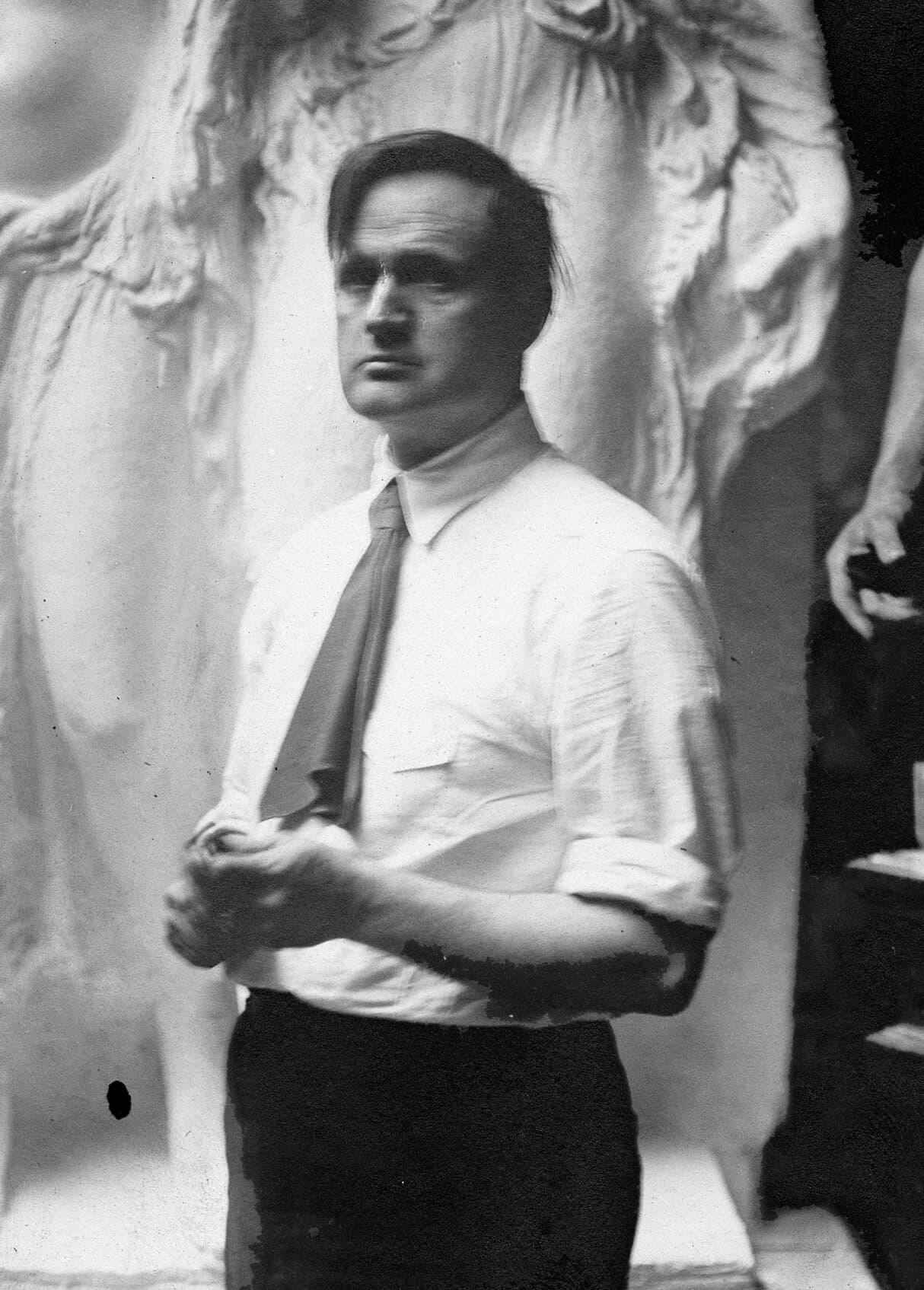
James Earle Fraser: The Artist Behind the Design
James Earle Fraser (1876–1953) was one of America's most celebrated sculptors. Born in Winona, Minnesota, Fraser grew up in the Dakota Territory during the final years of the American frontier, an experience that profoundly influenced his artistic vision.
Fraser studied at the Art Institute of Chicago and the École des Beaux-Arts in Paris. He became known for monumental works including “End of the Trail,” a poignant sculpture depicting a weary Native American on horseback that became one of the most reproduced images in American art.
In 1911, the U.S. Mint commissioned Fraser to design a new five-cent piece. The result, the Buffalo Nickel (also known as the Indian Head Nickel), entered circulation in 1913 and became one of the most beloved coin designs in American numismatic history.
Obverse: The Native American Portrait
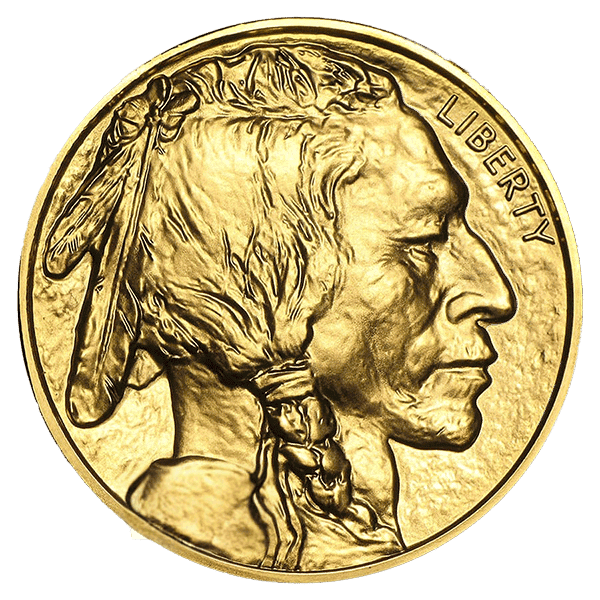
The obverse (front) of the Gold Buffalo features a composite portrait of a Native American in profile, facing right. Fraser stated that he used three Native American models as inspiration:
- •Iron Tail, an Oglala Lakota chief who participated in Buffalo Bill's Wild West show
- •Two Moons, a Northern Cheyenne chief who fought at the Battle of Little Bighorn
- •John Big Tree, an Onondaga/Seneca actor (though some historians debate his involvement)
The portrait captures a dignified, timeless quality that Fraser intended as a tribute to indigenous peoples. The word “LIBERTY” appears above the portrait, with the year of minting below.
Reverse: Black Diamond the Buffalo
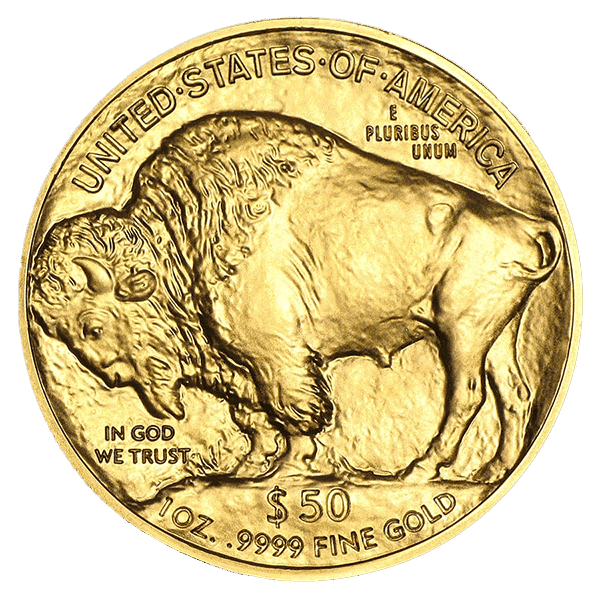
The reverse (back) features an American bison standing on a mound of earth. Fraser reportedly used “Black Diamond,” a bison residing at the Central Park Zoo in New York City, as his primary model.
The bison, often called a buffalo in American vernacular, represents the American frontier and the natural heritage of the Great Plains. The animal stands in a powerful, grounded stance that conveys strength and permanence.
Inscriptions include “UNITED STATES OF AMERICA,” “E PLURIBUS UNUM,” “IN GOD WE TRUST,” and the face value of “$50.” The purity “.9999 FINE GOLD” and weight “1 OZ.” also appear on the reverse.
Cultural & Historical Backdrop
Fraser created the original Buffalo Nickel design during a period of reflection on America's westward expansion. By the early 1900s, the frontier era had ended, Native American populations had been decimated, and the American bison had been brought to the brink of extinction.
The design was Fraser's deliberate tribute to a vanishing America. He later wrote: “My purpose was to create a coin which would be truly American, one that could not be confused with the coinage of any other country.”
“I did not intend the Indian to represent any one individual, but rather a type that I hoped embodied the genuine American character of the original Americans.”
— James Earle Fraser
The Buffalo Nickel circulated from 1913 to 1938, and its imagery became deeply embedded in American culture. When the U.S. Mint sought a design for its first 24-karat gold bullion coin in 2006, Fraser's century-old artwork was the natural choice.
The Modern Bullion Program
The American Gold Buffalo was authorized by the Presidential $1 Coin Act of 2005 and first minted in 2006. It was created to compete with other .9999 fine gold coins, particularly the Canadian Gold Maple Leaf.
2006 Launch
First .9999 fine gold coin produced by the U.S. Mint, meeting demand for a pure 24-karat American gold coin.
Bullion & Proof
Available in both bullion (investment) and proof (collector) versions, each year featuring the classic Fraser design.
West Point Mint
Gold Buffalos are struck at the West Point Mint in New York, one of the U.S. Mint's four production facilities.
Ongoing Production
Minted annually since 2006, the Gold Buffalo has become a cornerstone of the U.S. Mint's bullion program.
Learn more about the Gold Buffalo's history at Monex Knowledge Base
What the Design Signals to Investors
For investors, the design conveys more than visual appeal:
American Heritage
The iconic imagery connects to over a century of American numismatic tradition. Investors recognize the design instantly, a factor that supports liquidity and trust.
Government Authority
The design's official U.S. Mint provenance signals authenticity and weight/purity guarantees backed by the federal government.
Timeless Value
Fraser's 1913 design has endured for over a century. Its continued use on modern bullion suggests permanence, a quality investors seek in store-of-value assets.
Global Recognition
The Buffalo design is recognized by dealers and investors worldwide, facilitating transactions across borders and markets.
Collector Crossover
The design's artistic merit appeals to both bullion investors and numismatists, potentially broadening the buyer pool when selling.
Buffalo vs. Eagle: Design Philosophy
The U.S. Mint produces two gold bullion coins with distinct design philosophies:
Gold Buffalo
- • Historical 1913 design by James Earle Fraser
- • Native American and bison imagery
- • Celebrates American frontier heritage
- • Artistic, collectible aesthetic
- • Single consistent design since 2006
Gold Eagle
- • Augustus Saint-Gaudens' 1907 Liberty design
- • Lady Liberty and eagle family imagery
- • Symbolizes freedom and national ideals
- • Classic patriotic aesthetic
- • Reverse redesigned in 2021
Compare Buffalo and Eagle coins in detail at Monex: Buffalo vs. Eagle
Key Dates in Buffalo Design History
James Earle Fraser born in Winona, Minnesota
Fraser commissioned to design new five-cent coin
Buffalo Nickel enters circulation
Buffalo Nickel production ends (replaced by Jefferson Nickel)
James Earle Fraser passes away
Presidential $1 Coin Act authorizes Gold Buffalo program
First American Gold Buffalo coins minted
Gold Buffalo remains U.S. Mint's premier 24-karat bullion coin
Related pages